
Evil Exposed
As Christians we may disagree on many things, but let us speak with one voice on the nature of evil, for it was unveiled to us as clearly as any lesson could be in the final events of Jesus’ life.
Could one Belief Unite All Christians?
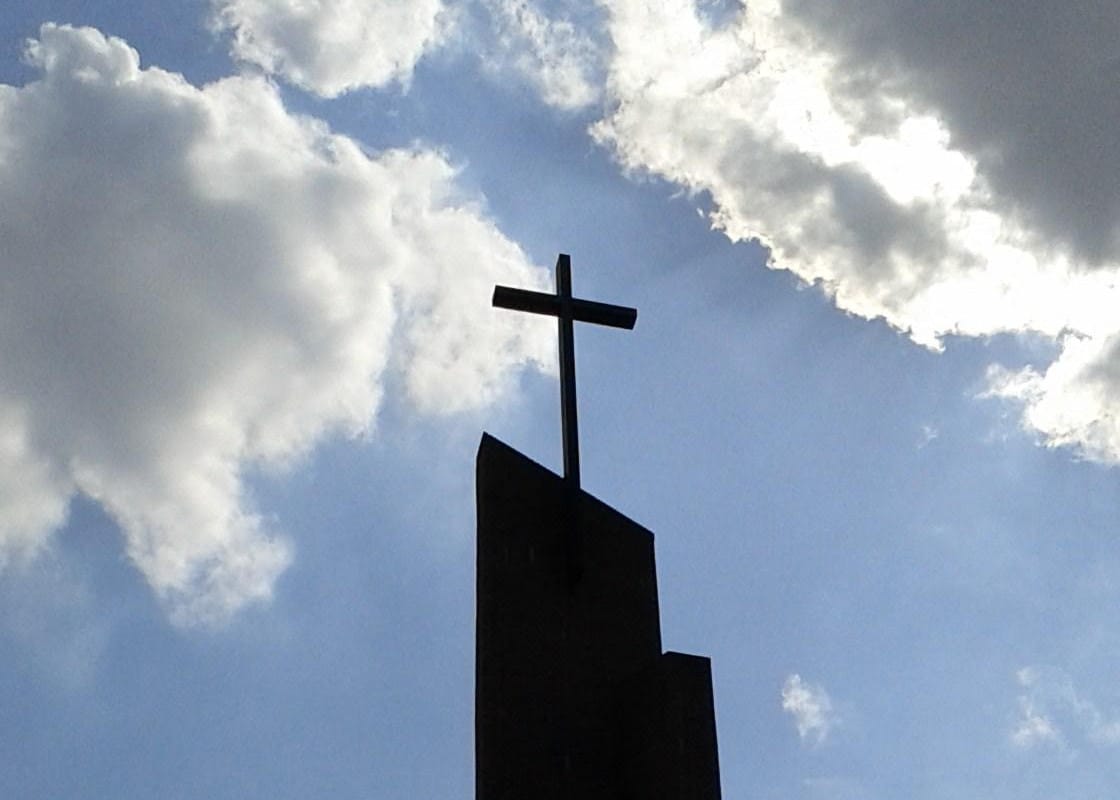
The chasm between different branches of Christianity is so deep today that some might question whether Christians hold anything in common. I believe they do. It is found in the emblem that Christians have used for centuries to symbolize their belief system — the cross. While theories about the purpose of the cross vary widely, its significance is accepted by all Christians. And one lesson of the crucifixion and events surrounding it is not disputed: it uniquely exposes the true nature of good and evil and the stark contrast between them as they clash face to face.
This is not a trivial lesson, for to define goodness, we must distinguish it from evil, and evil does not announce that it is evil when it comes. Evil prefers to pose as a great good (Matthew 24:24; cf. 2 Corinthians 11:14) while accusing real goodness of being evil (Mark 3:22; Luke 23:2, 5). That is why Jesus taught his followers to evaluate any cause by its fruit (Matthew 7:16) rather than by its claims to goodness (Matthew 7:21, 22). With that in mind, let us look at the scenes at the end of Jesus’ life.
Serving Others or Self-Serving
As the evening of Jesus’ arrest arrives, he gathers his disciples for the last meal he will eat with them. But when they come to the table, he assumes the role of servant, bending to wash their feet (John 13:2-5). And in washing their feet, Jesus not only demonstrates humility himself; he also prompts his disciples to humility by reminding them of their ongoing need for forgiveness (John 13:4-10). This chore is one of his last acts — an example of service to others that he asks his followers to emulate (Matthew 20:25-28; Mark 10:42-45). He then warns against the enemy of service — the quest for power:
“The kings of the Gentiles lord it over them, and those in authority over them are called ‘benefactors.’ Not so with you; instead the one who is greatest among you must become like the youngest, and the leader like the one who serves.”
(Luke 22:25, 26)
As Jesus exemplifies service to others, evil is manifesting self-serving. Jesus had predicted this self-serving in the parable of the vineyard, in which self-enrichment motivates the tenants’ to kill the owner’s son: “Those tenants said to one another, ‘This is the heir. Come, let’s kill him and the inheritance will be ours!’” (Mark 12:7). The motif of self-serving appears again and again throughout this night. Judas exits the upper room to trade the best person he has ever known for the self-enrichment of 30 silver coins (Matthew 26:14-16). The Jewish religious leaders choose to sacrifice “one man” for their own self-interest, hoping to preserve the existing power structure that maintains their authority (John 11:45-50; 18:14, 24). Pilot sends an innocent man to die, not only to satisfy the Jewish leaders, but also to maintain his own status with Caesar (Luke 23:22-24; John 19:4-16).
Including or Ostracizing
How can these men live with themselves while they sacrifice others for their own benefit? They justify “punching down” [https://dictionary.cambridge.org/dictionary/english/punch-down] on others by classifying them as undeserving. It is the same rationale that allows all those in power to diminish, defame, vilify, and even dehumanize others. Inferior beings, they reason, deserve to be treated badly.
It is no surprise that the religious leaders look down on others, since they see themselves as “not like other men” (Luke 18:11). They believe they deserve to walk around in “long robes,” receiving “elaborate greetings in the marketplaces and the best seats in the synagogues and the places of honor at banquets” (Matthew 23:25; Luke 20:46). At the same time they have repeatedly shown contempt for others: humiliating a woman caught in adultery by dragging her before Jesus to be condemned (John 8:4-7), insulting a woman of ill-repute for gifting Jesus with expensive perfume (Mark 14:3-5), and criticizing a man healed of his paralysis for carrying his mat on the Sabbath (John 6:41).
And they have continually harassed Jesus himself, deriding him for associating with the wrong class of people (Luke 7:34), attempting to entrap him by pitting Mosaic law against the law of the occupying Romans (Matthew 17:24-27; John 8:3-11), condemning him for failing to honor the Sabbath properly (John 5:16-18), and faulting his disciples for violating ceremonial cleansing traditions (Mark 7:1-8) and desecrating the Sabbath by harvesting grain (Matthew 12:1-8).
However, the pride of the religious leaders has been based on outward forms of religion (John 18:28) — piety that can be seen (Matthew 6:1): public prayer (Matthew 6:5), public philanthropy (Mark 12:31), public rituals (Mark 7:2-4), and observable Sabbatarian prohibitions (Matthew 12:1-8, 9-141; Luke 13:14-16). Thus, the Pharisee who prides himself for being better than others proclaims, “I fast twice a week; I give a tenth of everything I get” (Luke 18:12), and those ten percent donations are precise down to the minutia of “mint, rue, and every herb” (Luke 11:42). But the attention to form has diverted attention from matters of the heart (Mark 7:6; Luke 6:43-45, 11:42) — matters that affect the fundamental well-being of others: justice, mercy, and faithfulness (Matthew 23:23). And because outward form has become their priority instead of inward goodness, those they convert to their version of religion are worse off than they were (Matthew 23:15).
As the night of Jesus’ trial progresses, these leaders now focus their hostility on Jesus, calling up false witnesses (Matthew 26:59-60; Mark 14:56-59; Luke 23:14), chastising him for disrespecting the high priest (John 18:22), and mocking his claim to be God’s Son (Mark 14:61-65; 15:29-32).
Jesus on the other hand, instead of disdaining the weak and needy (Matthew 12:20), has throughout his ministry reserved his harsh reproofs for those who use religion to benefit themselves by enhancing their authority, status, and wealth (Matthew 23; Mark 7:5-13; John 2:12-16). He has spoken truth to power.
Now, the last night of his earthly life, he leaves no question about the radical nature of his inclusiveness. Though the twelve disciples who are present at the last supper include the one who will betray him (Matthew 26:20, 21; John 13:11, 26), Jesus does not leave Judas out — either when he washes his disciples’ feet or when he passes around the bread and wine that symbolize his death (Matthew 26:26, 27).
Thus he reflects the generosity of a God who “causes the sun to rise on the evil and the good, and sends rain on the righteous and the unrighteous” (Matthew 5:45), reaffirming the inclusiveness that has characterized his ministry — healing foreigners (Mark 7:24-30), oppressors (Luke 7:1-10), sinners (Matthew 9:2-6), lepers (Luke 5:12-16), and the ritually unclean (Matthew 9:20-22); conversing with a woman who not only is a despised Samaritan, but lives with a man who is not her husband (John 4:7-30); and praising a woman of ill-repute who anoints his head with costly perfume (Mark 14:3-9).
Liberating or Subjugating
Evil is not satisfied to have power; it uses that power to rule over others and control them. When Jesus is arrested, the mob led by the religious leaders immediately takes away his freedom. Carrying weapons of violence, the tools of domination (Matthew 26:47; Luke 22:52), they shackle him (Matt 27:2; Mark 15:1; John 18:12) and keep him bound and under guard throughout the night (Luke 22:63; John 18:24).

Though the crime they charge Jesus’ with is not a civil infraction but a religious one — blasphemy (Matt 26:63-66; Luke 23:4, 14, 15, 22; John 18:38; 19:4) — the punishment they have in mind exceeds their authority. Therefore, these religious leaders summon the power of the state (Mark 14:61-64).
Pilate tries to avoid being drawn into what is clearly a religious conflict, suggesting the Jewish leaders judge Jesus by their own rules, but that is not sufficient for their plans, because they cannot legally invoke the death penalty (John 18:31). They must, therefore, breach the wall between church and state in order to inflict lethal violence on this man they hate.
Jesus, on the other hand, refuses to summon either earthly or divine power to establish his kingdom, declaring:
“My kingdom is not from this world. If my kingdom were from this world, my servants would be fighting to keep me from being handed over to the Jewish authorities.”
(John 18:36)
His mission has always been to invite, not compel; to liberate, not imprison; to release, not bind. One of the first acts of his ministry was to “proclaim release to the captives and the regaining of sight to the blind, to set free those who are oppressed” (Luke 4:18). Throughout his life, he has remained true to that vision, avoiding the efforts of others to invest him with earthly power (John 6:15). Instead he has brought relief — freedom not only from disease and disability, but also from burdensome traditions and rules.
But while Jesus’ invitation to the oppressed is gentle (Matthew 11:28), his rebukes to the oppressor are sharp. Though forbearing with the weak (Matthew 12:20; Mark 10:14; Luke 17:2), he is unsparing with the powerful (Matthew 23; Luke 11:51, 52). Just a few days before his trial, he drove the merchants out of the temple (Luke 19:45, 46).
Now, during the last hours of his life, he refuses to use power to restrain either his traitorous disciple or his captors, even though he knows that he is able to do so. He engages neither the aid of heaven nor earthly force to stop his enemies. When Peter uses his sword to resist Jesus’ arresting party (John 18:20), he receives Jesus’ reproof instead of praise:
Put your sword back in its place! For all who take hold of the sword will die by the sword. Or do you think that I cannot call on my Father, and that he would send me more than twelve legions of angels right now?
(Matthew 26:52, 53)
During Jesus’ arraignment, when Peter lies to distance himself from Jesus, Jesus does not mute his disciple’s tongue; instead he turns toward him with a look that brings Peter to tears (Luke 22:61, 62). After the resurrection, instead of Peter being avenged for his cowardice, he is specifically included with the other disciples (Mark 16:7), and even entrusted with increased responsibility (John 21:15-17).
Caring or Harming
Evil is not content to merely control others; it must also oppress. Those who have been devalued are soon mistreated. Actions follow words. Evil takes pleasure in causing pain to the people it has branded as inferior. Thus, with Jesus in their power, the Jewish leaders and civil soldiers add physical torture to their disdainful mockery. They strike Jesus (Matthew 26:67, 27:30; John 19:3), press a crown of thorns into his head (Matt 27:29; John 19:2), flog him (Luke22:63; John 19:1), and finally end his life by crucifixion (Matthew 27:31-35; Mark 15:24; Luke 23:33).
But Jesus does not strike back. He heals the wound inflicted by Peter’s sword (Matthew 26:52). As the night wears on and Jesus is brought to trial before the Sanhedrin (Matthew 26:59-68; Mark 14:53-65), Pilate (Matthew 27:1, 2; Mark 15:1,2; ), and Herod (Luke 23:6-11), he refuses to retaliate against either the humiliation or pain (Mark 15:3; Luke 23:9). As Isaiah had foretold:
He was treated harshly and afflicted,
but he did not even open his mouth.
Like a lamb led to the slaughtering block,
like a sheep silent before her shearers,
he did not even open his mouth.
He was led away after an unjust trial –
but who even cared?
Indeed, he was cut off from the land of the living;
because of the rebellion of his own people he was wounded.
(Isaiah 53:7, 8)
Even as Jesus is dying on the cross, his compassion does not fail. He asks forgiveness for those crucifying him (Luke 23:34), promises the thief whose ridicule has turned to faith that he will meet him in Paradise (Luke 23:39-43), and arranges for the care of his grieving mother (John 19:25-27).
Enlightening or Obscuring
Another contrast between good and evil this night that must not be overlooked is between light and darkness. As the Gospel of John observes, “The one who practices the truth comes to the light, so that it may be plainly evident that his deeds have been done in God” (John 3:21).
Jesus declares “I am the light of the world” and promises, “The one who follows me will never walk in darkness, but will have the light of life” ((John 8:12; 9:5). As a light, he seeks not to obscure but to reveal God (Matthew 1:23; John 12:45, 46).
But while goodness seeks to enlighten; evil shrouds its work. Evil may disguise itself as light, but it does its deeds in the shadows. As Jesus declares, “Everyone who does evil deeds hates the light and does not come to the light, so that their deeds will not be exposed” (John 3:20).
It is therefore no accident that those conspiring against Jesus wait until nightfall to carry out their plot. Since this is Passover weekend, Jerusalem is teeming with people, many of whom have been listening to the teachings of Jesus. The religious leaders dare not come for him when the crowds may protest or even thwart their actions.
Jesus confronts their secrecy: “Day after day when I was with you in the temple courts, you did not arrest me. But this is your hour, and that of the power of darkness!” (Luke 22:53). They have no answer, but the Gospel record says that his arrest is at night, and he is condemned to death by the Sanhedrin before daybreak (Mark 14:53-72). The plot to kill him is completed while it is still morning (Matthew 27:1; Mark 15:1), and he is crucified by 9:00 a.m. (Mark 15:25). Evil has obscured its worst deeds in darkness.
Life or Death
The last promise Jesus makes is one of life, assuring the criminal dying beside him of a plae in Paradise. It is a hope he has held out to his followers throughout his ministry.
“Just as Moses lifted up the serpent in the wilderness, so must the Son of Man be lifted up, so that everyone who believes in him may have eternal life.”
(John 3:14, 15)
“Whoever drinks some of the water that I will give him will never be thirsty again, but the water that I will give him will become in him a fountain of water springing up to eternal life.”
(John 4:14)
“I am the resurrection and the life. The one who believes in me will live even if he dies, and the one who lives and believes in me will never die.”
(John 11:25, 26)
But the Pharisees, Jesus’ most frequent critics, though they are the sect of life with their doctrine of the resurrection (Matthew 22:23; Acts 23:8) and passion for studying scripture as the source of eternal life (John 5:39, 40), have long been plotting death for their Messiah (Mark 3:6).
Now that they have succeeded in killing Jesus, their greatest concern is that he will come back to life (Matthew 27:62-64). Not only is he known for raising the dead (Luke 7:22); he has alluded to his own resurrection, using the metaphors of Jonah’s three days in a fish (Matthew 12:40) and a temple that is rebuilt in three days (John 2:19).
So after Jesus is buried, the chief priests and Pharisees again enlist the power of Rome to keep his death permanent. Coming to Pilate, they say, “Sir, we remember that while that deceiver was still alive he said, ‘After three days I will rise again.’ So give orders to secure the tomb until the third day. Otherwise his disciples may come and steal his body and say to the people, ‘He has been raised from the dead’ ” (Matthew 27:63, 64).
In spite of all precautions, the soldiers of the guard return from the tomb Sunday to report a blinding vision of angels, a stone rolled away, and an empty tomb. So evil adds its final touch; it rewrites history. In exchange for a bribe and a guarantee that they will not be punished for falling asleep on the job, the soldiers agree to spread the story that, while they slept, Jesus’ disciples stole his body (Matthew 28:11-13).
When Jesus comes to reveal the character of God, that disclosure also exposes the character of evil in a way that nothing else could. In the final events of his life, the nature of evil is amplified and reveals the true destination where its path leads. Not only do the final hours of Jesus’ life display the fruit of goodness: humility, inclusion, forgiveness, truth, light, and life. They also unmask the fruit of evil: self-serving, pride, disdain for others, violence, darkness, and death.
The religious leaders have portrayed themselves as the righteous ones, and Jesus as the seditious one who incites the populace (Luke 32:2-5). They have criticized Jesus throughout his ministry: for failing to support religious rules and traditions, for failing to keep the Sabbath properly, for allowing his followers to commit misstep after misstep, and for failing to condemn and distance himself from sinners. Yet in the end, the true character of this religious fervor is exposed — these religious leaders are the ones who bind, mock, torture, and murder the embodiment of righteousness. This is where evil leads; this is the fruit of a false righteousness.
As Christians we may disagree on many things, but let us speak with one voice on the nature of evil, for it was unveiled to us as clearly as any lesson could be in the final events of Jesus’ life. It is proud, it is self-serving, it devalues others, it is cruel, it hides its deeds in darkness, and it leads to death.
References
Matthew 26, 27
Mark 14, 15
Luke 22, 23
John 13-19
The Scriptures quoted in this article are from the NET Bible® https://netbible.com copyright ©1996, 2019, used with permission from Biblical Studies Press, L.L.C. All rights reserved.